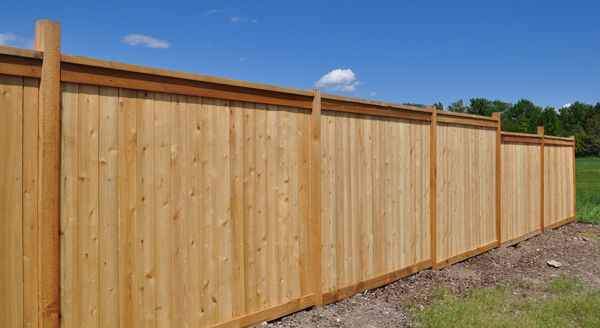
Wood is what most Irving homeowners want in the backyard. And I get it. Nothing really beats the look of a tall cedar fence around a Texas yard. We install pressure-treated pine, western red cedar, and the occasional cypress build. We don't cheap out on posts, hardware, or lumber selection, and that's a big reason our fences are still standing after a decade.
Wood Options
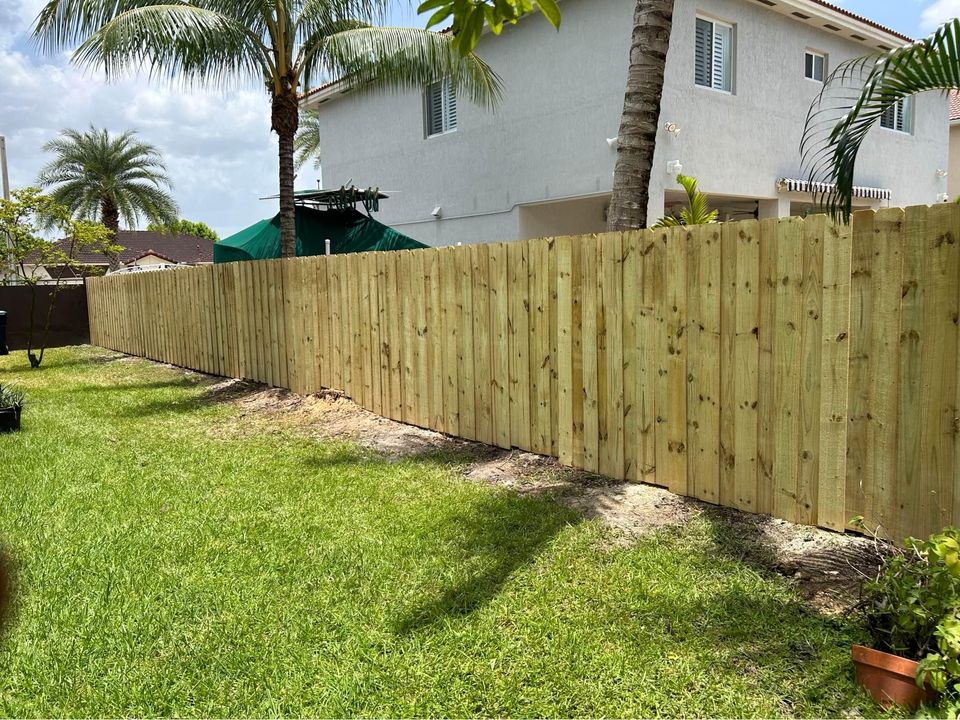
Western Red Cedar (most popular). Naturally rot-resistant, holds up well with Texas humidity swings, and it'll weather out to a silver-gray if you don't stain it. A cedar fence in Irving should give you 20-25 years if the posts are set right. It costs more upfront than pine, but over time it usually makes sense because you're not replacing it as often.
Pressure-Treated Pine. Affordable and easy to get. It'll last 12-15 years in our climate if you keep it stained every 3-4 years. We use #2 grade or better — not the twisted, knotty stuff you see sitting at big-box stores. Posts are always rated for ground contact.
Cypress (premium). Not as common, but it's a solid choice if you want something that lasts longer than cedar and you can make the budget work. Naturally insect-resistant, with a good-looking grain. It's harder to source, so we usually need 2-3 weeks lead time.
Wood Fence Styles
Board-on-board (most common in Irving). Vertical boards alternating on both sides of the rails, overlapping by an inch. You get full privacy, and you don't get those gaps when the wood shrinks in summer. This is what most Irving homeowners ask for in backyards.
Side-by-side (cheaper). Pickets butted up right next to each other with no overlap. It's cheaper, but you'll see gaps once the wood dries out. Fine if you mainly need to keep pets in. Not great if full privacy is the goal.
Shadowbox. Alternating boards on opposite sides of the rails. Looks the same from both sides, which helps if you're trying to keep things fair with the neighbor. It also lets air move through, and that can help the fence last longer.
Cap and trim. A flat cap board across the top with trim below it. Gives the fence a more finished look, costs about 15% more, and looks real good on cedar.
Heights and HOA Rules
6-foot is standard for backyards in Irving and most surrounding cities. Most HOAs allow 6 feet without special approval. 8-foot fences usually need a variance in most Irving neighborhoods.
Front yard fences in Irving are limited to 4 feet by city code, and most HOAs want split-rail or decorative styles. We build those too.
Our Installation Process
- Step 1 — Free quote within 1 hour: Send us a sketch with measurements or your property survey. We'll get you a quote within an hour.
- Step 2 — Utility marking and approvals: Texas law requires an 811 call before digging — utility companies mark the lines within 2 business days. HOA approval, if needed, can take 1-2 weeks. We coordinate the install schedule once everything is cleared.
- Step 3 — Installation (2-4 days): If the old fence has to come out, we tear it out on day one. Posts get set in concrete, then we give them 24-48 hours to cure before we hang pickets. Most yards in Irving take 2-3 days total.
- Step 4 — Walkthrough and cleanup: Final walkthrough with the owner. All scrap lumber and concrete gets hauled off the same day.
Also Serving These Areas
We install wood fences across the DFW area: Grand Prairie, Las Colinas, Coppell and Carrollton.